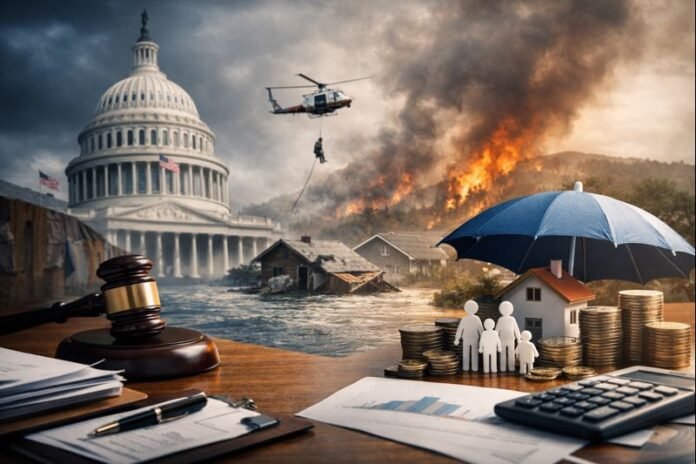
When natural disasters hit, the damage is rarely limited to homes and infrastructure. Entire financial systems feel the shock—especially disaster insurance programs designed to protect individuals, businesses, and governments from catastrophic loss. At the center of these systems lies an often overlooked force: politics.
Understanding the role of politics in disaster insurance funding is essential to grasping why some regions recover quickly while others struggle for years. From legislative priorities to partisan debates, political decision-making influences how disaster insurance is funded, who benefits, and who is left exposed when the next crisis arrives.
Disaster Insurance Funding: A Brief Overview
Disaster insurance funding refers to the financial mechanisms that support insurance coverage for large-scale natural events such as hurricanes, floods, earthquakes, wildfires, and pandemics. These mechanisms typically include:
- Government-backed insurance programs
- Public–private partnerships
- Emergency relief funds
- Reinsurance arrangements subsidized by the state
Unlike standard insurance, disaster insurance often involves significant public funding, because private insurers alone cannot absorb the extreme, correlated losses disasters create.
This is where politics inevitably enters the equation.
Why Politics and Disaster Insurance Are Inseparable
Disaster insurance funding is not just an actuarial challenge—it is a political one. Governments decide:
- Which disasters qualify for federal or state support
- How much public money is allocated
- Who is eligible for subsidized coverage
- Whether climate risks are acknowledged or ignored
Each of these decisions reflects political priorities, ideological beliefs, and electoral considerations.
Legislative Power and Budget Allocation
One of the clearest ways politics shapes disaster insurance funding is through legislative budgeting.
Competing Priorities in Government Spending
Disaster insurance programs compete with healthcare, defense, education, and infrastructure for limited public funds. Lawmakers must justify disaster funding to taxpayers—often after the fact, when emotions are high, and media attention is intense.
In politically divided governments, this can lead to:
- Delayed funding approvals
- Reduced insurance payouts
- Temporary funding extensions instead of long-term solutions
The result is uncertainty for insurers and policyholders alike.
Federal vs. State Politics: Who Takes Responsibility?
In many countries, disaster insurance funding is split between national and regional governments. This division often creates political tension.
Federal Governments
- Tend to control large-scale disaster relief funds.
- Influence national insurance programs.
- Set regulatory frameworks
State or Local Governments
- Manage zoning laws and land-use policies.
- Decide whether participation in insurance programs is mandatory.
- Bear political accountability for preparedness failures.
When disasters strike, disputes over responsibility can delay funding and weaken insurance systems.
Political Ideology and Risk Perception
Political ideology plays a major role in how disaster risk is perceived and addressed.
Climate Change and Insurance Funding
In regions where political leaders downplay climate change, disaster insurance funding may:
- Underestimate future risk
- Rely on outdated data.
- Fail to adjust premiums realistically.
Conversely, governments that prioritize climate resilience often push for:
- Expanded insurance coverage
- Higher public subsidies
- Investments in risk reduction and mitigation
These ideological differences directly affect the sustainability of disaster insurance programs.
Lobbying, Influence, and the Insurance Industry
The insurance industry itself is a powerful political actor.
How Lobbying Shapes Disaster Insurance
Insurance companies lobby governments to:
- Limit mandatory coverage requirements.
- Secure government reinsurance backstops
- Avoid strict pricing regulations.
While lobbying can stabilize markets, it can also skew funding structures in favor of insurers rather than policyholders—especially low-income or high-risk communities.
Politics determines how much influence these industry voices hold.
Election Cycles and Disaster Funding Decisions
Disasters rarely align neatly with election calendars—but funding decisions often do.
Short-Term Politics, Long-Term Risk
Politicians may prioritize:
- Visible disaster relief over preventive funding
- Immediate payouts over sustainable insurance reform
Investing in long-term disaster insurance infrastructure rarely delivers quick political wins, even though it saves money and lives over time.
This mismatch between political incentives and insurance realities weakens disaster preparedness.
Inequality and Political Decision-Making
Another critical aspect of the role of politics in disaster insurance funding is its impact on social equity.
Who Gets Protected—and Who Doesn’t
Political decisions often determine:
- Which regions receive subsidized insurance
- Whether low-income households can afford premiums
- How quickly marginalized communities receive payouts
Areas with less political influence may face underfunded insurance systems, leading to slower recovery and more serious economic damage after disasters.
International Politics and Disaster Insurance
In developing nations, disaster insurance funding is often shaped by international politics.
- Multilateral organizations provide insurance pools.
- Foreign aid influences coverage structures.
- Geopolitical interests affect funding priorities.
Political alignment can determine access to disaster insurance support, leaving some vulnerable regions without adequate protection.
Can Politics Improve Disaster Insurance Funding?
While politics often complicates disaster insurance funding, it can also drive meaningful improvement.
Policy Reforms That Make a Difference
When political leadership aligns with scientific data and public interest, governments can:
- Expand public insurance programs.
- Encourage risk-based pricing with social protections.
- Invest in disaster prevention and resilience.
Transparent, evidence-based policymaking strengthens insurance systems and reduces long-term public costs.
The Future of Disaster Insurance in a Political World
As climate-related disasters increase in frequency and severity, the political stakes surrounding disaster insurance funding will only grow.
Future success depends on:
- Cross-party cooperation
- Long-term funding commitments
- Honest risk communication
- Policies that balance market stability with social protection
Ignoring the political dimension is no longer an option.
Final Thoughts
The role of politics in disaster insurance funding is profound and unavoidable. From legislative budgets to ideological debates, political choices shape who is protected, who pays, and how societies recover from disaster.
Understanding this connection empowers citizens, policymakers, and insurers to demand smarter, fairer, and more resilient insurance systems—before the next disaster tests them.
In a world where disasters are becoming the norm rather than the exception, the intersection of politics and insurance may be one of the most important conversations we can no longer afford to avoid.